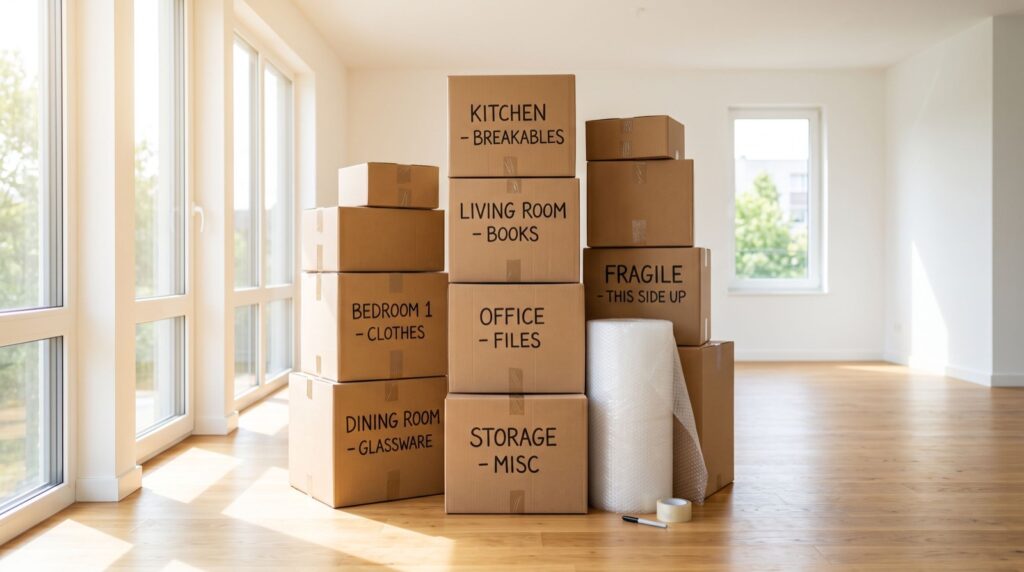
Packing Tips for Moving: 15 Pro Techniques for a Fast 2026 Move
Smart packing tips for moving can cut your relocation stress in half. Good packing protects your belongings, speeds up unloading, and saves money on materials and replacements. In this 2026 guide, you will learn 15 professional techniques that make packing faster, safer, and far more organised, whether you are shifting within Sharjah or across the UAE.
Most moving damage happens during packing, not transport. Get the packing right and everything else falls into place. Let us start with the foundations.
Start With the Right Packing Supplies
Great packing begins with the correct materials. Skimping here leads to crushed boxes and broken items. Gather everything before you start so you never pause mid-flow.
- Double-walled boxes in small, medium, and large sizes
- Bubble wrap, packing paper, and foam sheets
- Strong tape and a proper tape gun
- Permanent markers and colour-coded labels
- Wardrobe boxes and dish-pack dividers
Match the box to the weight. Heavy items like books go in small boxes; light bedding goes in large ones. This simple rule prevents box failures. Experienced movers in Al Nahda Sharjah always follow this weight-to-size logic.
15 Pro Packing Techniques That Work
These field-tested methods come straight from professional packers. Apply them and your move will feel effortless.
- Pack room by room, never mixing items from different spaces.
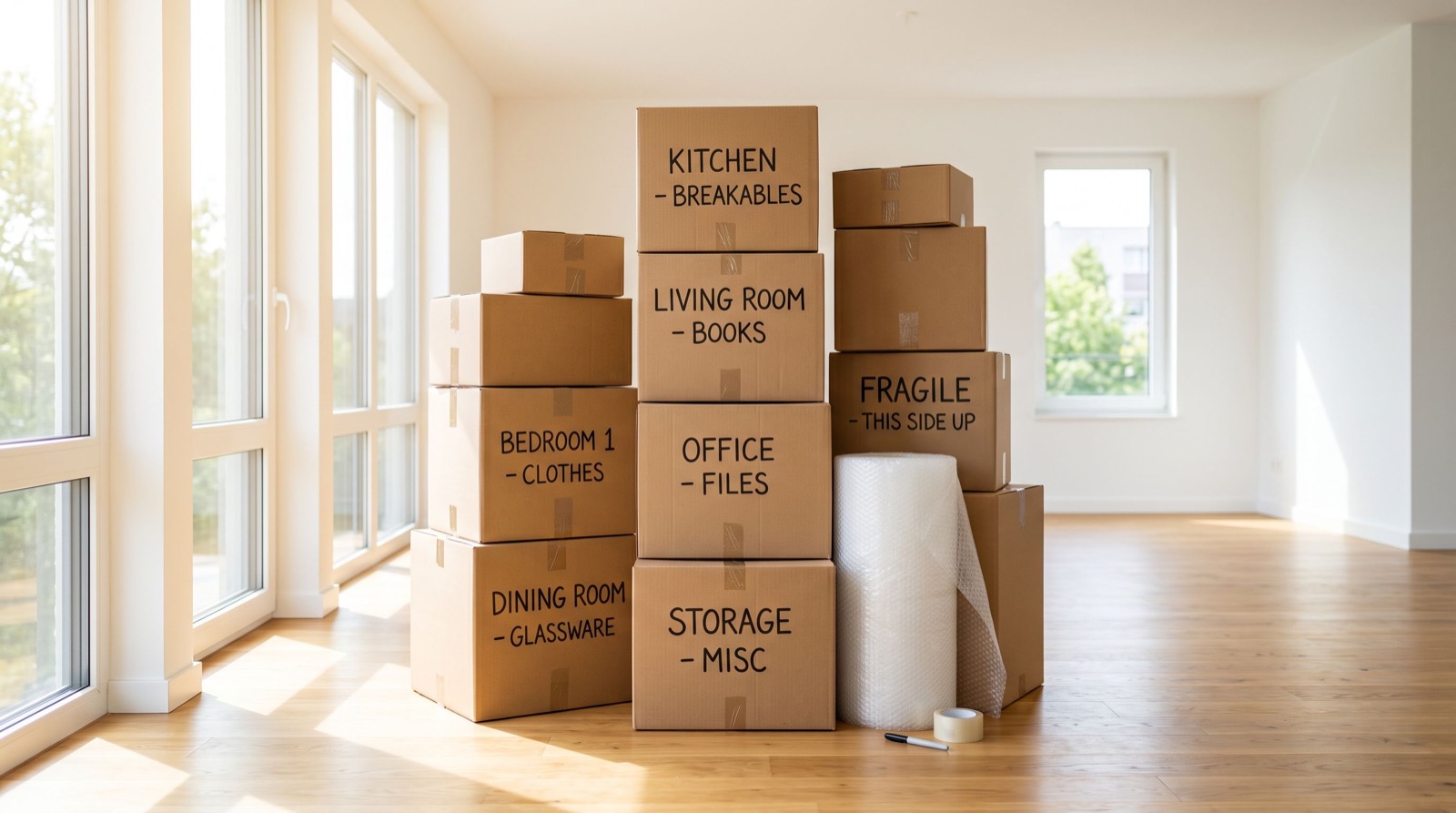
- Label every box on the top and two sides.
- Write the room name and a short content note on each box.
- Wrap plates vertically, like records, to prevent cracks.
- Fill empty gaps with paper so nothing shifts in transit.
- Use vacuum bags for duvets, pillows, and off-season clothes.
- Keep hanging clothes on their hangers inside wardrobe boxes.
- Photograph electronics before unplugging any cables.
- Tape screws and fittings to the furniture they belong to.
- Cover mattresses with dedicated mattress bags.
- Double-box fragile decor and mark it clearly.
- Pack an “essentials box” you open first at the new home.
- Keep valuables and documents with you, not in the truck.
- Do not overfill boxes; keep each under a liftable weight.
- Seal liquids in sealed bags to avoid leaks.
The Essentials Box: Your First-Night Lifesaver
One box saves your first night in a new home. Pack a kettle, mugs, phone chargers, toiletries, a change of clothes, medications, and basic tools. Label it clearly and load it last so you unload it first. This single habit spares you from digging through twenty boxes at midnight.
Packing Materials Comparison
Choosing the right protection for each item type matters. This table shows what to use and why.
| Item Type | Best Material | Why It Works |
|---|---|---|
| Glassware and plates | Packing paper + dividers | Cushions and separates each piece |
| Electronics | Original boxes or foam | Prevents impact and static damage |
| Artwork and mirrors | Bubble wrap + flat cartons | Guards corners and glass surfaces |
| Clothing | Wardrobe boxes / vacuum bags | Keeps clothes clean and compact |
| Books and files | Small double-walled boxes | Handles weight without collapsing |
Avoiding the Most Common Packing Mistakes
Even careful people slip up under time pressure. Watch for these traps. Overpacking boxes makes them split. Under-labelling turns unpacking into a treasure hunt. Leaving fragile items unwrapped invites breakage. And starting too late forces rushed, careless work.
When time runs short, call in quality service providers who pack professionally. For complex villa moves, teams like these villa movers Mirdif residents rely on bring materials and technique together. For a broader checklist on safe household handling during a move, the guidance from the American Red Cross home inventory resource is a helpful starting point.
Labelling Systems That Save Hours
Labelling is the unsung hero of a fast move. A good system turns unpacking from a guessing game into a smooth, room-by-room process. Invest ten minutes in a labelling plan and you will save hours at the other end.
Colour coding is the simplest method. Assign each room a colour, then put a matching sticker on every box for that room. At the new home, place a colour sign on each doorway so movers deliver boxes to the right space instantly, without asking a single question.
Add a short content note to each label too. “Kitchen, plates and glasses” tells you exactly what is inside and how carefully to handle it. Numbering boxes per room also helps you confirm nothing goes missing in transit.
Create a master inventory list on your phone. Note each box number, its room, and its key contents. If a box vanishes, you know exactly what was in it, which is invaluable for insurance claims and peace of mind.
Mark fragile and priority boxes clearly. A bold “FRAGILE” on every side protects breakables, while an “OPEN FIRST” label on your essentials box makes the first night effortless. These small habits compound into a genuinely stress-free move.
A simple labelling checklist
- Assign one colour per room
- Write the room name and contents on every box
- Number boxes per room for easy counting
- Mark fragile boxes on all sides
- Keep a master inventory list on your phone
Frequently Asked Questions
How early should I start packing before moving?
Begin two to three weeks out with non-essentials like books, decor, and off-season clothes. Pack daily-use items last, in the final two days, so life stays normal until moving day.
What is the best way to pack fragile items?
Wrap each fragile item individually in bubble wrap, place it in a padded box, fill all gaps with paper, and label the box “FRAGILE” on every side so handlers know to take care.
How many boxes do I need for a move?
A one-bedroom home usually needs 20 to 30 boxes, while a three-bedroom home may need 60 or more. Order extra small boxes, since heavy items fill them faster than you expect.
Should I hire professional packers or do it myself?
Do the simple packing yourself and hire pros for fragile, bulky, or valuable items. Professional packers work faster and carry specialist materials that reduce the risk of damage.
Final Thoughts
The best packing tips for moving share one theme: preparation. Gather your supplies, work room by room, label everything, and protect fragile items twice over. Pack an essentials box, avoid overloading cartons, and start early enough to stay calm. Follow these 15 techniques and your 2026 move will be faster, safer, and far less stressful from the first box to the last.